

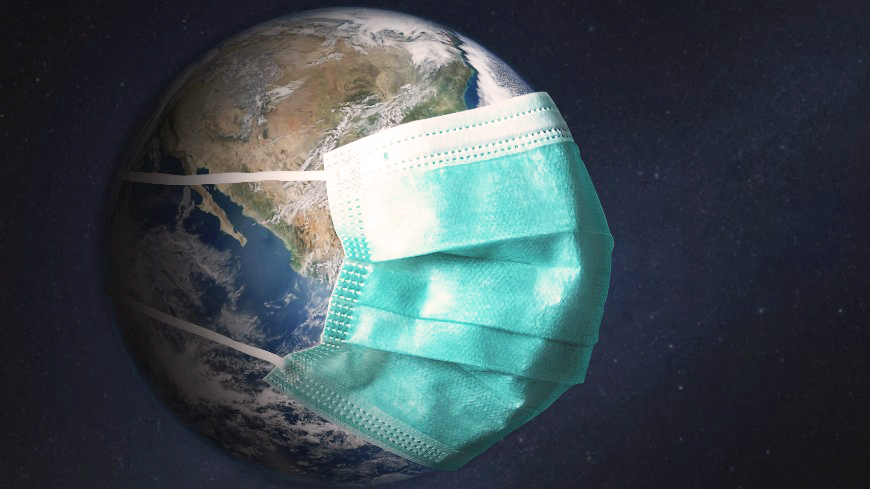
Life is a journey from womb to tomb. A pandemic is an infectious disease that has spread across a large region affecting substantial number of people. And now recently a newly virus called corona emerged interrupting the whole homo sapiens and affecting their day to day activities. The Coronavirus pandemic which was first brought to our attention in January after doctors in Wuhan, China noticed a strange, new virus spreading rapidly is history-defining. It is the biggest crisis that the many countries have faced in peacetime, so the response has been unlike anything most of us have ever experienced. Coronavirus has brought all the people around the world in their home. It has affected almost all countries in the world. Scientist believe that the virus development process is time consuming because it has to go through different phases of tastes. Through they are not sure too whether the currently tasted vaccine yields the result or not .Thus we human beings have to develop a method to live with the virus. It will ultimately changes the life style of and force us to follow the same. Through we got the true vaccine the human will not live the same as before roamly independently through the green planet.
In the same year after corona virus, nothing will be as it is was before. After this lockdown or pandemic, resision starts. Through corona virus has not reached in my home I have started thinking about the corona. It has almost occupied my half mind. We have most of the things important for continuing daily life activities such as food, clothes, books etc, but also we are not satisfied inside. This tells that we have become so much materialistic toward the world. It means after the pandemic -Health industries will be strong, the only human beings know the boundaries but not other species. Some aspects of our cities areas will be reshaped depending on how long the current pandemic lasts. Fear of density, and of bus stations and airports in particular, plus a desire for safer, more private surroundings may pull some toward the suburbs and rural areas. Families with children and the vulnerable, in particular, may trade their city apartments for a house with a backyard. But other forces will push people back toward the great urban centers. Ambitious young people will continue to flock to cities in search of personal and professional opportunities. The crisis may provide a short window for our unaffordable, hypergentrified cities to reset and to reenergize their creative scenes. If pandemics become the new normal, then tens of millions of urban service jobs will disappear. The pandemic is also accelerating deeper, longer-term trends affecting cities, such as the digitalization of retail, the move to a cashless economy, the shift to remote work and virtual delivery of services. People work and travel in a different way, their daily routines and the very rhythm of their lives change, including when they eat and how they communicate with their families. And when you are forced to do things differently, new habits begin to form. This doesn't have to take long - it could be as short as a few weeks or a month. The religion - one of the biggest source of culture for the human being, the epistemology of society - will never again be the same. The hotels and restaurants cannot provide the same hospitality or quality of interactions. We will not be able to travel that freely or enjoy the supply chains of the world so easily. We will think twice before going somewhere or to meet someone. The pandemic is already exacerbating signs of social anxiety and agoraphobia. Regaining trust takes time and these trends will take place for months after lockdowns are lifted. People will follow the social distancing and wear mask. They will be aware of unhygienic food and bad personnel habits.Hopefully, a cure to coronavirus will be found. But whatever happens, we should keep in mind that the threat of infectious disease is not going away. Pandemics are not the mere imaginary product of a few artistic types. Frankly speaking, we are at a dramatic inflection point. From an evolutionary point of view, health comes from community. Human life doesn’t thrive in isolation. Being part of a community is important for our mental health. As it is, we are already living in much more distant ways than has ever been the case. Should we continue on this path? The pandemic could give us an opportunity to restore lost connections and create more interrelated, cooperative societies. The coordinated efforts of scientists all over the globe to find a cure for the coronavirus suggest such cooperation is possible.
